
Helpful Resources for Pet Owners
Navigating pet care can be challenging.
We provide the information and connections you need to ensure your pets and community cats receive the best possible care.
Local, Regional & National Adoption Organizations
- Adopt A Pet – National
- Animal Resource Center – Bloomsburg
- Ashburns Animals On A Mission – Kratzerville
- Australian Cattle Dog Rescue Association – National
- Cats in Bloom Cat Cafe – Bloomsburg
- Cherished Cat Rescue Alliance – Lewisburg
- Fabulous Felines Cat Rescue – Bloomsburg
- Far Point Animal Rescue – Port Trevorton
- Far Point Collie Rescue – Port Trevorton
- 4 PAWS SAKE PA Pet Rescue ( 4pawssakepa@gmail.com) – Milton
- Friends and Ferals of Columbia County – Berwick
- Haven To Home Canine Rescue – Milton
- Heidi’s Furry Friends Rescue Inc – Williamsport
- Hillside SPCA Shelter – Pottsville
- Kats by Keithan Cat Rescue – Watsontown
- Lycoming Animal Protection Society Cat Rescue – South Williamsport
- Lycoming SPCA Shelter – Williamsport
- Meow House Cat Rescue – Williamsport
- Mid-Atlantic Great Dane Rescue League – Regional
- Mid-Atlantic English Springer Spaniel Rescue – Regional
- Mommy & Me Canine Rescue – Shamokin
- Monica’s Heart Greyhound Rescue – Altoona
- Mostly Mutts Canine Rescue – Sunbury
- Pennsylvania SPCA Adoption Center – Danville
- Pet Finder – National
- Pets Come First Shelter & Adoption Program – Centre Hall
- Phoenix Rescue Canine Rescue – Carlisle
- Ruth Snyder Memorial SPCA – Pine Grove
- The Scratching Post Cat Cafe – Lewisburg
Regional Store Sponsored Adoption Sites
PETCO Stores
(Bloomsburg, Muncy, Edwardsville & Wilkes Barre PA)
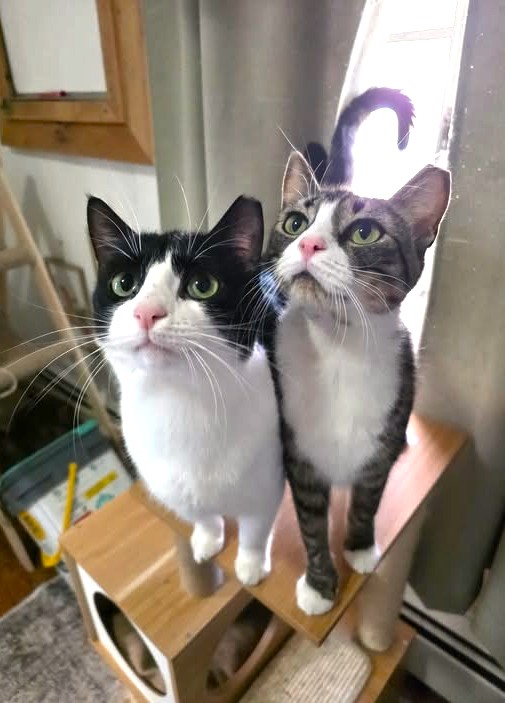
Petco stores have cats and kittens from several local rescues and shelters that are available for adoption and are on display at the stores. The Petco LoveAdopt program Petco Love | 501(c)(3) Nonprofit Animal Welfare Charity also supports dog and cat adoptions through their local stores.
Representatives from the rescues / shelters will work with you if you see one or more that you’d like to adopt.
PetSmart Stores
(Williamsport and Selinsgrove, PA)
PetSmart stores have cats and kittens from several local rescues and shelters that are available for adoption and are on display at the stores. PetSmart also sponsors QUARTERLY ADOPTATHONS AT THEIR STORES where several local rescues and shelters participate by showing their dogs, cats, puppies and kittens that are available for adoption. Representatives from local rescues / shelters will work with you if you see one or more that you’d like to adopt.
Low-Cost Spay/Neuter PROGRAMS
NOTE: Each Program has its own eligibility requirements.
Please check the program websites for further details.
PA PETS Spay/Neuter Programs ( https://pennsylvaniapets.org)
- Spay/Neuter Program for owned / pet dogs and cats
- (Columbia & Montour County residents only)
- TNR Spay/Neuter Program for outside, homeless cats
- (no residency restriction)
SUNPETS Spay/Neuter Program ( https://sunpets.org)
- Spay/Neuter Program for owned / pet dogs and cats
- (Snyder, Union, Northumberland Counties)
Cherished Cats Rescue Alliance ( https://www.cherishedcats.org/needhelp)
- TNR Spay/Neuter Program for outside, homeless cats
- (Snyder, Union, Northumberland counties)
- Spay/Neuter Program for owned cats
- (Snyder, Union, Northumberland counties)
Lycoming SPCA Spay/Neuter Program ( https://lycomingspca.org)
- Spay/Neuter Program for owned / pet dogs and cats
- (Lycoming County)
The SPCA of Luzerne County Spay/Neuter
Assistance Program (SNAP) (
https://www.spcaluzernecounty.org)
- Spay/Neuter Program for indoor (pet) cats only.
- Dogs not included.
- (Luzerne County)
Low-Cost Spay/Neuter CLINICS:
NOTE: Each Clinic has its own eligibility requirements.
Please check the clinic websites for further details.
- Allegheny Spay/Neuter clinics – State College & Woodland, PA
( https://petscomefirst.net) or Facebook
- Low Cost Essential Vet Services (LCEVS) – Selinsgrove, PA
(Facebook)
- Lycoming County SPCA low-cost spay/neuter clinic – Williamsport, PA
( https://lycomingspca.org/clinic)
- Nobody’s Cats Foundation – Camp Hill, PA
( https://www.nobodyscats.org)
- No Nonsense Neutering clinics – Allentown, Reading & Plains, PA
( https://www.nnnlv.org)
- Pennsylvania SPCA (PSPCA) clinic – Danville, PA
( https://danvillewellness@pspca.org)
- Scranton Spay/Neuter Division Clinics – Wilkes Barre & Scranton, PA
( https://scrantonspayneuter.org/schedule)
- Selinsgrove Veterinary Hospital Feline Shelter Care
(Spay / Neuter / Vaccination) Program
( https://selinsgrovevethospital.com/feline-shelter-care)
Low-Cost Vaccination Clinics:
(Check each website for clinic dates and prices)
- SUNPETS.org will be holding a one-day Dog and Cat Rabies Vaccination Clinic in September 2026.
See their website at https://www.SUNPETS.org for more details on location, time, cost and requirements.
- The PSPCA Low-Cost Clinic in Danville
( https://danvillewellness@pspca.org)
- PetSmart Stores
( https://petsmartways.com/petsmart-vaccination-clinic-prices)
- Petco Stores
( https://stores.petco.com/vaccination-clinics/pa)
- Tractor Supply Stores
( https://petvet.vippetcare.com)
EMERGENCY FOOD PANTRIES FOR PETS
- Agape – Bloomsburg, PA ( Home | Agape )
Agape’s Happy Tails Program
For individuals and families living in Columbia, Montour and Northumberland counties receiving Agape food support.
Pet food supplies are distributed during the 2nd Fresh Express event each month, helping ensure that families who rely on our food programs can also care for the animals they love.
- Arthur’s Pet Pantry – Milton, PA ( Nonprofit | Arthur’s Pet Pantry | Milton)
For pet owners in Snyder, Union and Northumberland Counties in need of TEMPORARY – NON-Permanent assistance with pet food for dogs and cats.
- Pet Pantry of Lycoming County – Williamsport, PA
(Facebook)
For pet owners in Lycoming County in financial hardship situations.
- List of available pet food pantries in PA (sponsored by Loving Care Cat Rescue) ( https://lovingcarecatrescue.org/resources/pa-pet-food-pantries)
Frequently asked questions
TNR stands for Trap Neuter Return. It is recognized both nationally and internationally as the most effective and humane process where community cats are trapped, spayed/neutered, vaccinated, and returned to their familiar outdoor locations where they know where to find food and shelter, and they are usually fed and sheltered by a “Good Samaritan” Colony Caregiver. TNR minimizes the number of unwanted kittens being born each year, thus reducing the number of cats in a colony over time through attrition.
TNR does NOT mean removing cats from existing colonies and relocating them into unfamiliar territory where they will not find food or shelter. By TNR’ing cats and returning them to their familiar location or colony, they will then continue to “protect” their familiar territory (without producing more kittens) to avoid the “vacuum effect” whereby non-spayed/neutered cats migrate into a vacated area looking for food sources if the spayed/neutered cats are physically removed, and the cycle starts again with more homeless kittens being born.
No. PA PETS provides financial assistance to limited-income residents in Columbia and Montour Counties (PA) to spay/neuter their pet dogs and cats, and to community volunteers in (now) 10 Pennsylvania Counties to TNR (Trap, Neuter, Return) outside, homeless (community) cats to minimize the number of unwanted kittens being born. While we do not operate a clinic ourselves, we partner with several local veterinary hospitals and clinics to offer spay/neuter surgeries and vaccinations to our approved clients. For residents in Snyder, Union or Northumberland counties looking to spay/neuter their pet dogs and cats, contact our sister organization, SUNPETS at www.sunpets.org.
Our TNR program is designed specifically for this purpose. Apply to our TNR Program to receive financial coverage of veterinary services, loaner traps (if needed), advice and training on best practices for the most effective
trapping, transporting and recuperating of spayed/neutered outside cats. When you are approved as a TNR Client, we also coordinate your veterinary clinic appointment(s) for you and pay the TNR Surgery/Vaccination invoices.
As much as we would like every dog or cat to have a home, the truth is that in semi-rural North Central Pennsylvania, there are many more puppies and kittens born each year than there are individuals or families to adopt them. What happens? They are surrendered to local (already overcrowded) shelters or rescues, or they are dumped by irresponsible pet owners to try to survive on their own with no access to food or shelter. Ask any local shelter or rescue group and they will tell you of their unending efforts to find loving homes for all the animals in their care.
The answer to this question lies with every person who cares. Here are a few things you can do.
- Spay or neuter your pet dogs and cats.
- Educate others about spaying and neutering.
- Volunteer with PA PETS, Inc. to help us raise funds to continue our mission to spay/neuter and vaccinate both dogs and cats in our region.
- Donate to PA PETS, Inc. to help us to help others to spay/neuter their pets and outside, homeless cats through our two programs.
- Support legislation aimed at reducing pet overpopulation.
NEVER FEED A COLD ANIMAL
When orphaned babies are cold, their digestive system slows down or completely stops working.
If you feed them while cold, the formula can sit in their stomach and ferment, or worse, they can aspirate it into their lungs. Aspiration pneumonia is one of the fastest ways to lose a baby animal.
Signs a baby may be too cold:
- Cold mouth/paws/belly
- Lethargic or limp
- Crying weakly or not at all
- Not moving much
- Refusing food
Your FIRST step should always be WARMTH.
- Use a heating pad on LOW under half the box.
- Warm rice sock.
- Warm water bottle wrapped in a towel.
- Keep them dry and out of drafts.
- Do NOT overheat them and NEVER place them directly on a heating source.
Once warm, THEN feeding can safely begin.
In an emergency, if you cannot immediately get kitten or puppy formula, the safest thing is usually:
- Keep the baby warm.
- Contact a rescue, rehabber, or vet ASAP.
- Use proper species-specific formula once instructed.
For kittens, proper kitten milk replacer (KMR) is ideal. Goat milk is sometimes used VERY short term in emergencies for kittens if absolutely nothing else is available, but it is still not a complete long-term diet.
Please also do NOT syringe feed quickly or squirt milk into babies’ mouths. Babies can aspirate incredibly easily.
We know people are trying to help, and we never want anyone to feel bad for caring enough to step in. But education saves lives, and these tiny babies are incredibly fragile. Sometimes the best thing you can do is:
- Keep them warm.
- Keep them quiet.
- Don’t feed random food or milk.
- Reach out for help.
PLEASE STOP FEEDING ORPHANED BABY ANIMALS COW’S MILK
One of the most common things we hear when people bring us orphaned kittens, puppies, rabbits, small animals, or call us about wildlife is: “I’ve been feeding them cow’s milk.”
We know that people mean well. Truly. Most people are just trying to help keep the baby alive until they can get help. But unfortunately, cow’s milk can actually make these babies MUCH sicker and sometimes even kill them.
Cow’s milk is NOT made for kittens, puppies, or wildlife. Their tiny bodies cannot properly digest it.
Instead of nourishing them, it often causes:
- Severe diarrhea
- Dehydration
- Bloating and stomach pain
- Aspiration pneumonia if improperly fed.
- Dangerous blood sugar crashes
- Worsening weakness in already critical babies
And when these babies are only a few weeks old, severe diarrhea and dehydration can kill them very quickly. Another huge issue we see is people trying to force feed cold babies.
In the United States, approximately 2,500 dogs and cats are born every hour. This number far exceeds the number of good homes available. Here are a few reasons why you should spay or neuter your pet.
- Spayed or neutered animals are generally healthier and happier. The risk of some cancers is greatly reduced by sterilizing your pet.
- Sterilized animals are less likely to roam and fight.
- It costs less to license a sterilized animal.
- Municipal resources going towards dealing with the problem will be decreased.
- In seven years, one female cat and her offspring could produce up to 420,000 cats.
- In six years, one female dog and her offspring could produce up to 67,000 dogs.
And, of course, most importantly, your animal will not be contributing to the current overpopulation problem in our area.
Here’s a few tips:
- Don’t buy a puppy from a puppy mill, an unlicensed backyard breeder or a pet store. Mass overbreeding is a major cause of pet overpopulation.
- Instead, help save lives. Visit your local animal shelter and adopt a friend.
- Educate yourself on responsible pet care.
- Spay or neuter your pet.
- Make sure your pet receives an annual vet checkup.
- Give your pet lots of love and patience. Make them part of your family.
The Feline Immuno-Deficiency is a slow virus that affects a cat’s immune system over a period of years.
- FIV is a cat-only disease and cannot be spread to humans or other non-felines.
- FIV cats most often live long, healthy, and relatively normal lives with no symptoms at all.
- FIV is not easily passed between cats. It cannot be spread casually – like in litter boxes, water and food bowls, or when snuggling and playing. It is rarely spread from a mother to her kittens.
- The virus can be spread through blood transfusions, badly infected gums, or serious, penetrating bite wounds. (Bite wounds of this kind are extremely rare, except in free-roaming, unneutered tomcats.)
- A neutered cat, in a home, is extremely unlikely to infect other cats, if properly introduced.
- Many vets are not educated about FIV since the virus was only discovered 15 years ago.
- Despite what many people think, cats with this condition can live perfectly long, happy, healthy, lives.
Excerpt from www.pawsfla.com (FIV Demystified). For more information, please see www.pawsfla.com. See also www.catdepot.org.